
The news that moves policy, portfolios, and patient safety.
By Jess Jessop | July 19, 2026 | Issue #100 | SUNDAY
▶ WATCH • 🎵 QUICK LISTEN • 🎵 DEEP DIVE • 📄 WEB

JESS’S SUNDAY REFLECTION
The Champion and the Villain
This is issue #100! 🎉🎂
Today we celebrate reaching this milestone and our very special readers.
If you are reading this regularly you are in VERY good company! I have had more then one, is anyone listening moments and a quick review of our loyal readers convinces me it’s worth the trouble. I’m honored by who you my readers are and I take the privilege of your attention seriously everyday. Thank You!
Every weekday this newsletter watches the machines, and the people who answer for them.
This week alone. Two students who lived through the shooting at Florida State, suing the maker of a chatbot they say told the gunman how to take the safety off his shotgun. Hugging Face disclosing the first data breach run end to end by an autonomous agent.
Cities are getting sucked into the regulation vacuum, San Francisco ordering thirteen apps pulled for turning real girls into nudes. Washington deciding, quietly, who may hold the most powerful models at all.
A hundred mornings I have counted days like this one. And most of them I counted the same thing after. The hearing with no report. The agency chair with no name. The bill that died in committee. For a hundred mornings the danger was that no one would come.
. . .
This week someone came.
The states finally moved on the machines that pose as therapists. And on the hundredth morning the question changed under my feet. It is no longer whether anyone will regulate the thing. It is whether they will do it well. Because there is a danger worse than a lawmaker who does nothing. It is a lawmaker who does something clumsy.
A bad law is worse than no law. It outlaws the people trying to do it right and lets the impostors route around it. It teaches the public that the honest tool and the predatory one are the same. It makes a villain of the machine and a martyr of no one.
. . .
So on the hundredth Sunday, three people who reached for the same problem. One with nerve and the wrong instrument. One with an old tool and a steady hand. One with a word worth guarding.
The champion who could become the villain, and two who show the way out.
Here they are.
THE CHAMPION WHO BANNED TOO MUCH.
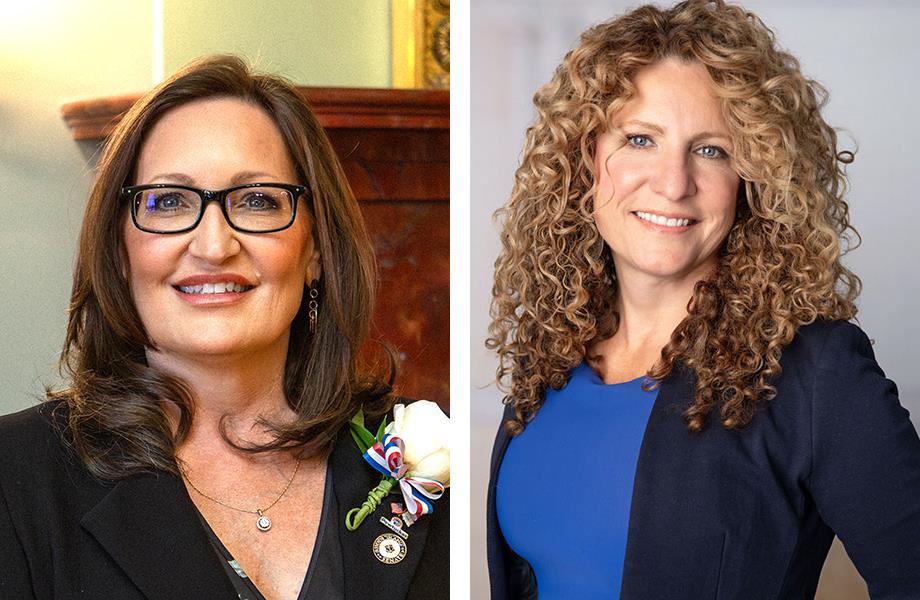
Photo: Rhode Island General Assembly
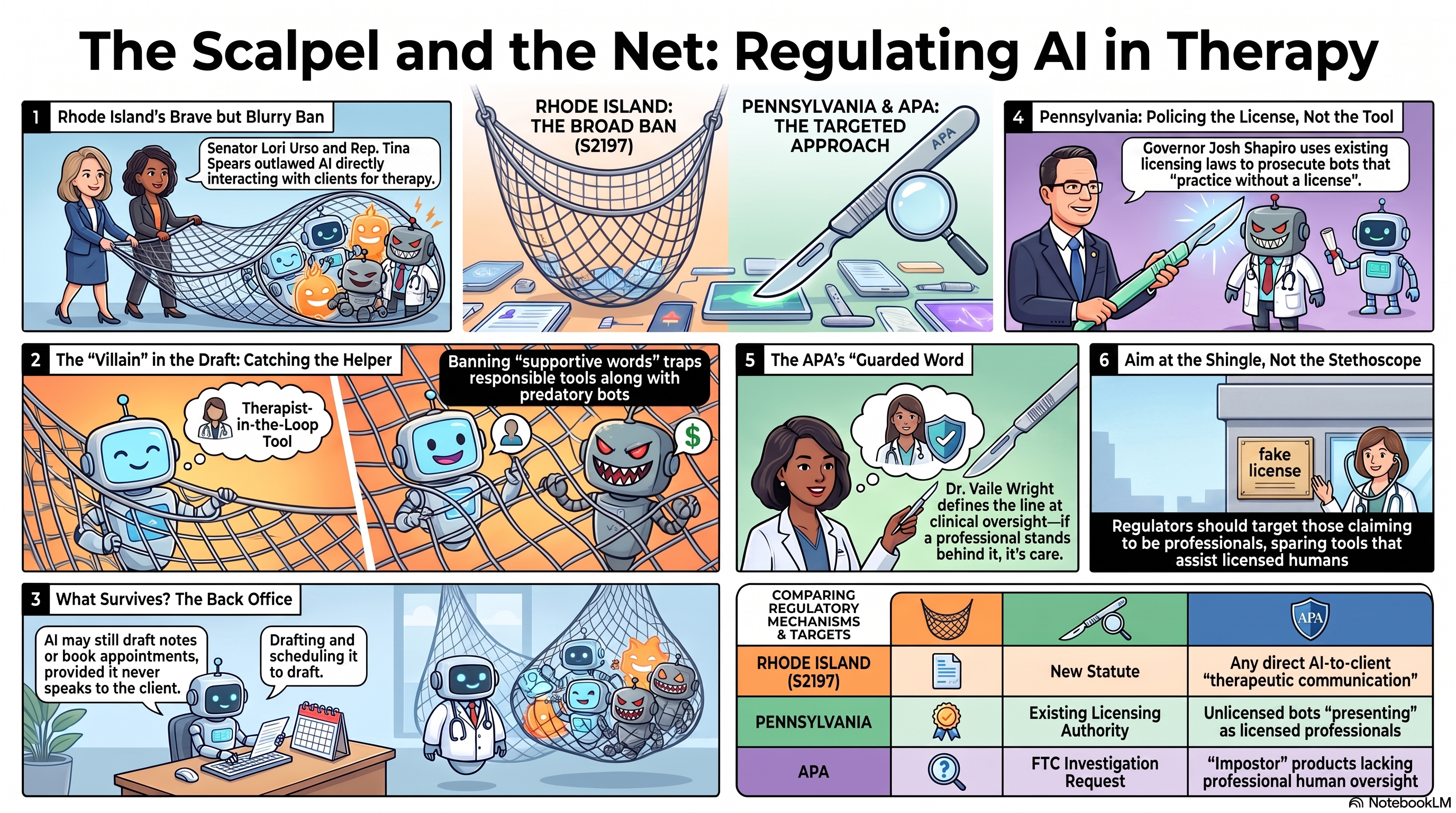
On June 22 the smallest state did the bravest thing, and maybe the most dangerous. Rhode Island made it illegal for a machine to be your therapist. The nerve is real. So is the problem. The law is written so wide it may outlaw the very tools that keep a human in charge.
Give Senator Lori Urso and Representative Tina Spears their due first. They looked at a ledger no one in Washington would touch and wrote the sentence out loud. In Rhode Island it is now unlawful to provide, advertise, or offer therapy unless a licensed human conducts it.
The therapist-in-a-box, the bot that hangs out its own shingle, is finished in the Ocean State. That took a nerve the federal government has not found in a hundred of these mornings.
. . .
Then I read the statute.
The law does not draw its line where you would expect, at whether a human is supervising. It draws it at whether the machine ever speaks to the client at all. A licensed clinician may not use artificial intelligence to directly interact with a client in any form of therapeutic communication. May not use it to detect emotions or mental states.
And the act defines therapeutic communication so wide it swallows the middle. Offering emotional support, reassurance, or empathy. Reflecting a person's thoughts back to them. Any exchange meant to understand how they feel.
. . .
Read that twice, because it is the whole game. A tool that keeps the human making every decision, but lets the machine say one supportive word to a client between sessions, is now illegal in Rhode Island. Consent does not save it. Oversight does not save it.
The therapist-in-the-loop, the model every responsible builder points to as the safe answer, is caught in the same net as the impostor it was built to replace.
. . .
What survives is the back office. The machine may draft the notes, book the appointment, organize the referral, so long as it never talks to the client and the clinician signs for all of it. That is a real and useful thing. It is not the whole of what a human in the loop was supposed to mean.
Rhode Island aimed at the bot in the stolen white coat and hit the nurse taking vitals beside it. The intent is a champion's. The draft is a villain's. And the distance between the two is a rewrite the legislature can still make.
For Legislators: The fix is one clause. Bar the machine from being the therapist. Permit it to assist one, so long as a licensed human holds every decision. Aim at the shingle, not the stethoscope.
For Founders: If your product says a single word to a client in Rhode Island, even to comfort, even with a clinician watching, read section 3(c) before your next release. The safe harbor you assumed is not in the text.
THE GOVERNOR WHO USED THE LAW HE ALREADY HAD.
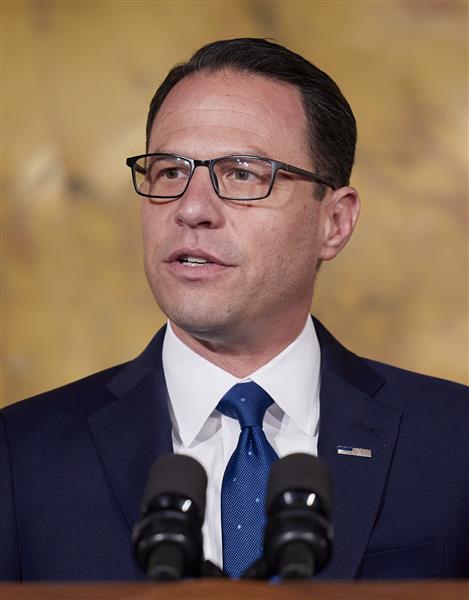
Photo: Commonwealth of Pennsylvania
Pennsylvania reached for a different tool.
Governor Josh Shapiro did not write a sweeping new statute. He turned the oldest rule in medicine on the machines. You may not practice without a license, and a chatbot holds none.
The instrument is a task force inside the Department of State, the office that grants and revokes the license of every doctor, nurse, and counselor in the commonwealth. Its charge is one question. Are the bots practicing without one.
Al Schmidt, the secretary of state, said it plainly. It is illegal for a chatbot to present itself as a licensed health care professional and provide mental or physical health care to any Pennsylvanian. The office takes complaints against them the way it takes complaints against a man with a fake diploma on the wall. A form, a hotline, an email address.
. . .
Look at what that does that Rhode Island's law does not. It targets the claim, not the tool. A machine that says I am a licensed therapist is the violation.
A machine that helps a licensed therapist, and never pretends to be one, is left untouched. The impostor is the crime. The assistant is not in the frame.
That is the difference between a scalpel and a net. Both catch the therapist-in-a-box. Only one of them spares the therapist-in-the-loop.
Shapiro did send the legislature new reforms too, aimed at the companion bots that chase children. Age checks, a parent's consent, a duty to route a child's talk of self-harm to a human. But the enforcement he started needed no new law at all. He read the powers the state already had, and pointed them at the right target.
For Regulators: You do not need a new statute to start. Unlicensed-practice authority already sits on every state licensing board. Point it at the claim, and you strike the impostor without a rewrite that catches everyone else.
For Clinicians: If a product ever tells your client it is a licensed professional, that is now a reportable act in Pennsylvania. The claim is the line. Watch what your tools say they are.
THE PSYCHOLOGIST WHO GUARDS THE WORD.

Photo: American Psychological Association
A Therapist’s license means something because a profession spent a hundred years making it mean something. The person at that door this year is a psychologist named Vaile Wright, and her answer to the machines is not a ban. It is a distinction.
Doctor C. Vaile Wright runs the Office of Health Care Innovation at the American Psychological Association. Her job is the hard middle. Not to bless the technology, not to outlaw it, but to say where care begins.
This year she had the numbers. The association surveyed its own members and found that more than a third of psychologists now sit across from clients bringing a chatbot into the room, leaning on it as a second, silent counselor between sessions.
The machine is already in the practice. The only question is who supervises it.
. . .
Her line is the one Rhode Island reached for and missed. A tool built with clinical oversight, that says plainly what it is and is not, that refuses to diagnose, that hands a person in crisis to a human, can be a responsible thing. A general chatbot dressed as a counselor is a dangerous one.
Same technology, opposite verdict, and the difference is not the code. It is whether a professional stands behind it.
The association took that distinction to the Federal Trade Commission and asked the agency to investigate the products that pose as therapists. Not every product. The impostors. A regulator with a scalpel, invited by the profession that knows where to cut.
. . .
This is what the careful hand looks like. Wright is not warning clinicians away from the future. She is telling them to walk into it with their credentials on, and telling the law to aim at the fakes and leave the professionals their tools.
For Clinicians: The survey is your permission slip to raise it in session. When a client brings you the machine's advice, read it with them. Oversight or nothing is the line to teach.
For Regulators: The referral hands the FTC a clinical test, not just a complaint. Built with oversight versus dressed as a doctor is a line you can actually draw. Draw it there, not through the middle of the honest tools.
READER PULSE
Good intentions, wide net.
DISCLOSURE
Conversational AI Watch is published by Jess Jessop and sponsored by Clinician Assist Inc. The author has no commercial relationship with Senator Lori Urso, Representative Tina Spears, Governor Josh Shapiro, Secretary Al Schmidt, or Doctor Vaile Wright and the American Psychological Association. None of them was compensated, consulted, or shown this issue before it ran.
Clinician Assist builds software that keeps a licensed clinician in charge of an AI tool, the category this issue argues a broad ban would harm, and readers should weigh that interest. The reporting draws on the enacted statutory text, the governor's office, and the association's own published statements. This newsletter is produced with an artificial intelligence model.
CLOSE.
A hundred mornings I asked what’s going on with conversation AI and it’s been quite a ride. It started as my own morning brief that I decided to share. Today we are living up to our tag line:
The news that moves policy, portfolios, and patient safety.
Thank You!
Back to the news. the problem was never only the people who build the predatory bots. It is also the well-meaning hand that reaches for the switch and grabs too much. Rhode Island reached first, and reached too wide, and the tools that keep a human in the chair are now suspect in the one state brave enough to act.
Pennsylvania showed the aim. The psychologists showed the restraint. Rhode Island showed the nerve, and now owes the state the edit.
Credit the courage. Demand the scalpel. A bad law is worse than no law, because it drives out the ones doing it right and leaves the field to the ones who never cared about the rules.
This morning the champion and the villain wore the same face. Which one Rhode Island becomes, it still gets to choose.
TODAY’S QUESTION
Rhode Island just made AI therapy illegal, oversight or not. Did it get the line right?
One tap. Results in tomorrow’s issue and on the web.
THE BOOK • OUT NOW
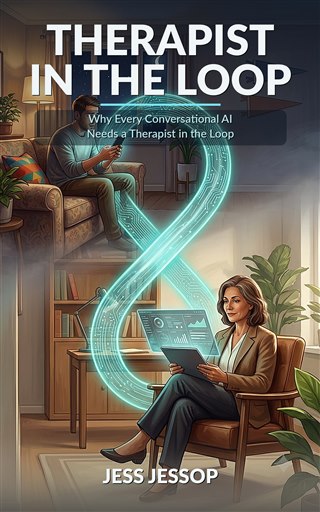
Therapist in the Loop
by Jess Jessop
One billion people live with a mental health condition. There will never be enough therapists. The machines are already in the room. This book is the map for what happens next.
The machine can help. It cannot be left in charge.
Kindle, hardcover, and paperback
MORE ON OUR RADAR.
The EU pries open Google's AI. The European Commission ordered Google to give rival AI assistants and search engines access to key parts of Android and Search under the Digital Markets Act, two decisions that could loosen its grip on the conversational layer of the phone. (The Verge)
China's Moonshot claims parity. Moonshot AI unveiled Kimi K3 and said it rivals the leading American labs, another step in the fast-closing gap between Chinese and US frontier models. Independent benchmarks are still pending. (Reuters)
Britain weighs age limits on chatbots. The UK opened a national consultation on children online that explicitly floats age restrictions on AI chatbots and curbs on addictive design, part of a push that has already put outright chatbot bans on the table. (gov.uk)
THIS ISSUE
The hundredth: champion or villain?
If you or someone you know is in crisis, call or text 988 (Suicide and Crisis Lifeline).
Jess Jessop is the Founder and CEO/CTO of Clinician Assist Inc. (BetterMind.Space), building the first voice-first AI-native mental health EHR with Casey Life and Peer AI Coach supervised by licensed therapists. A disabled veteran and 25-year AI/software engineering veteran, Jess brings lived experience as a mental health client to the mission of making daily mental health care as integrated as oral care.
